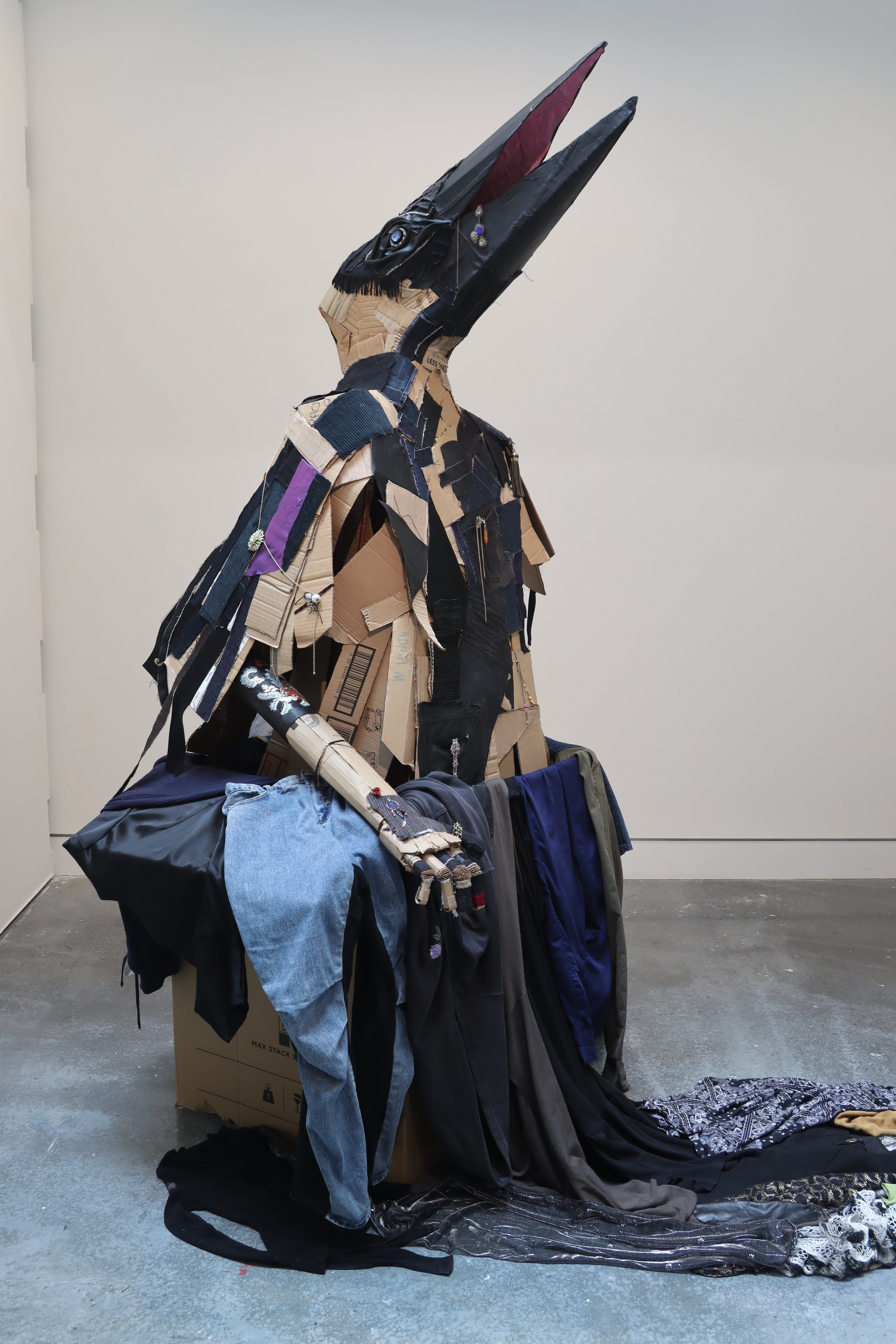
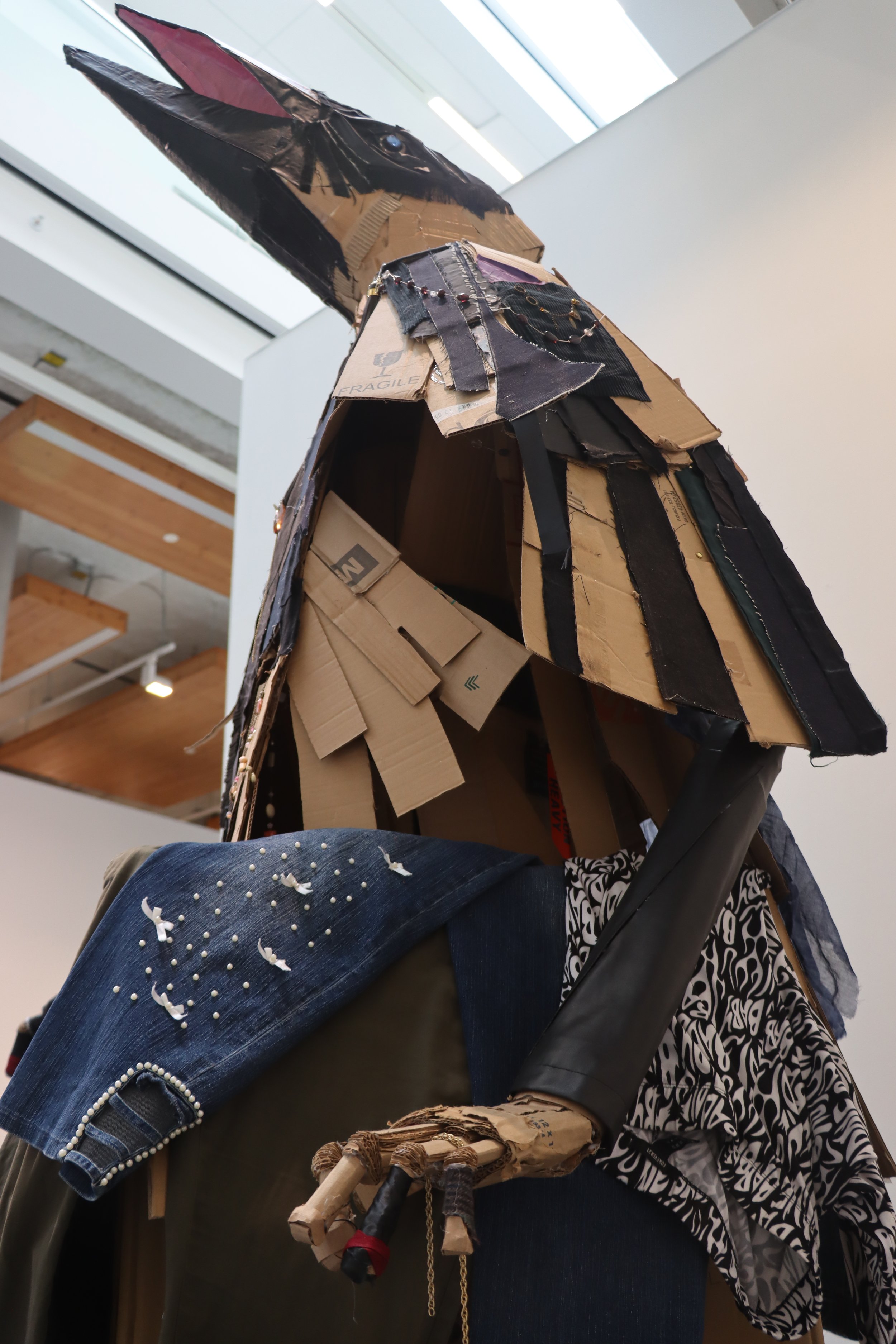
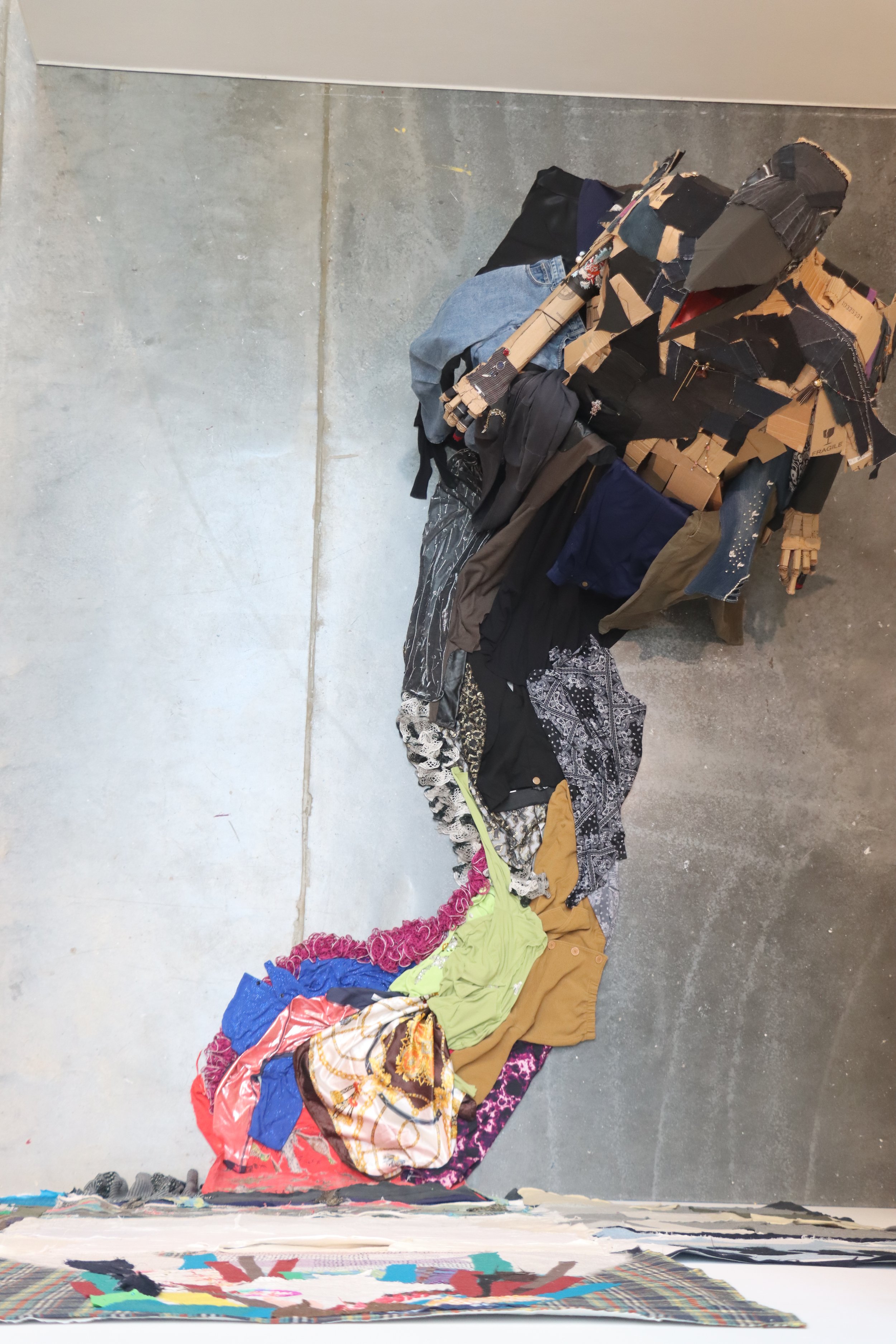
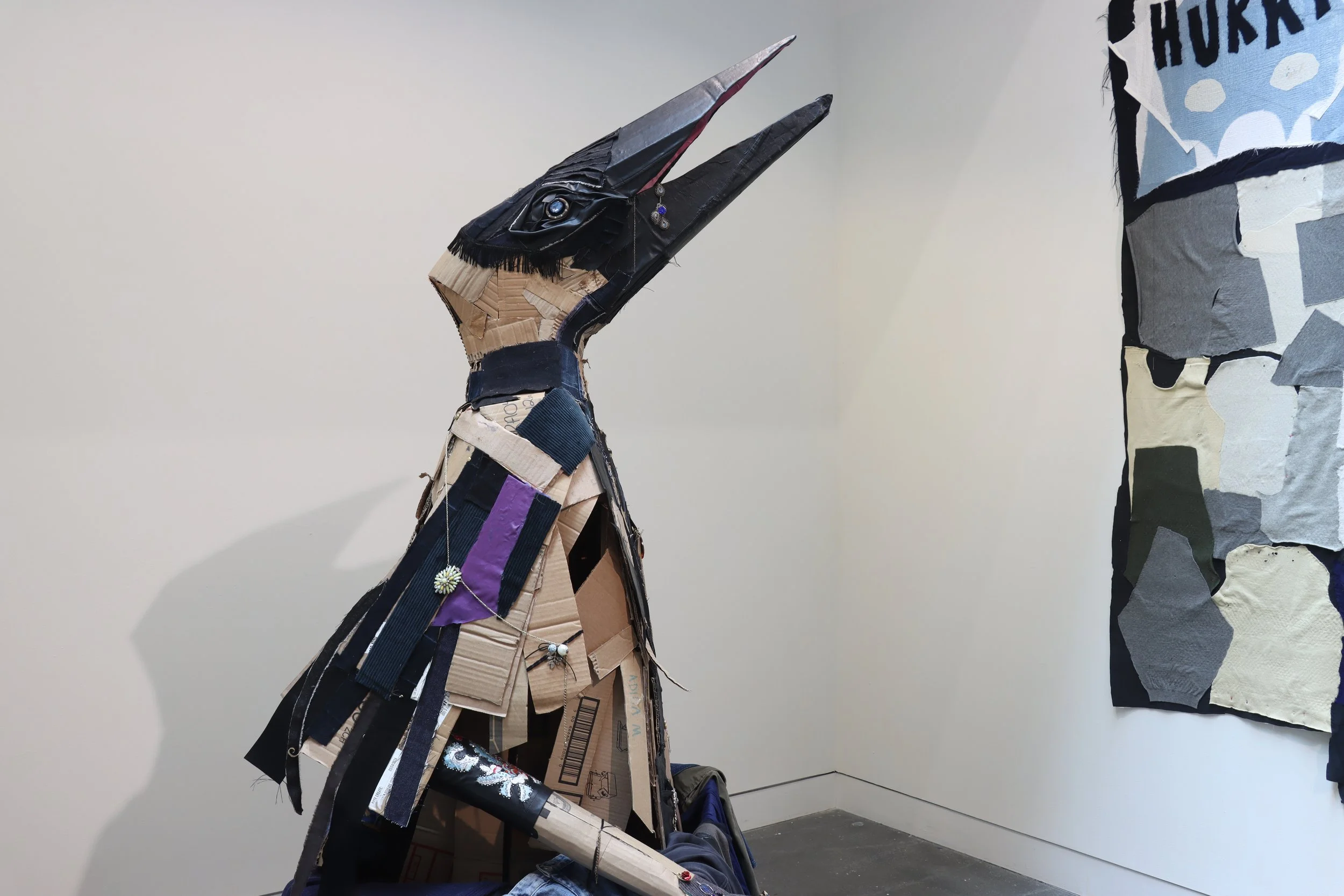
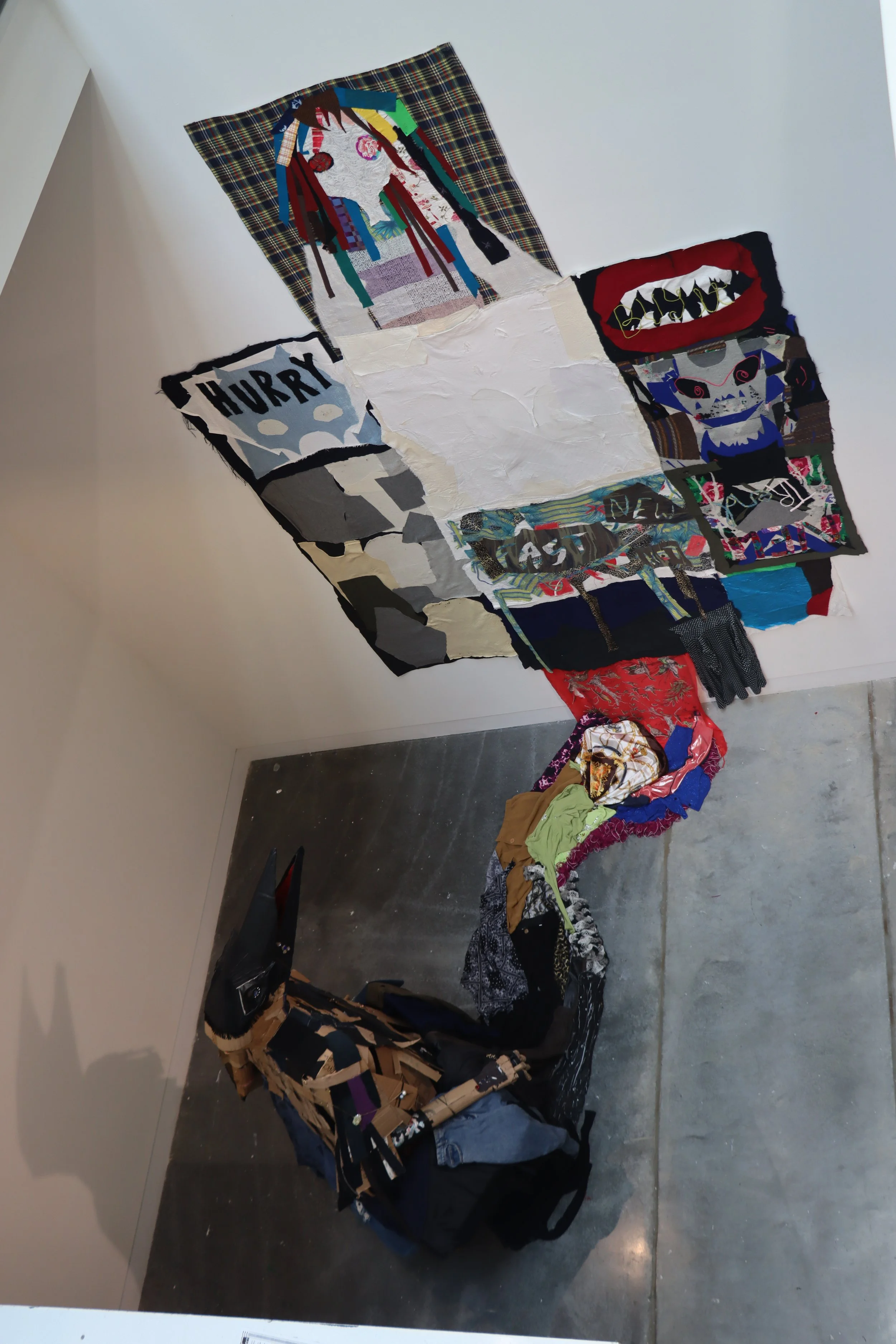
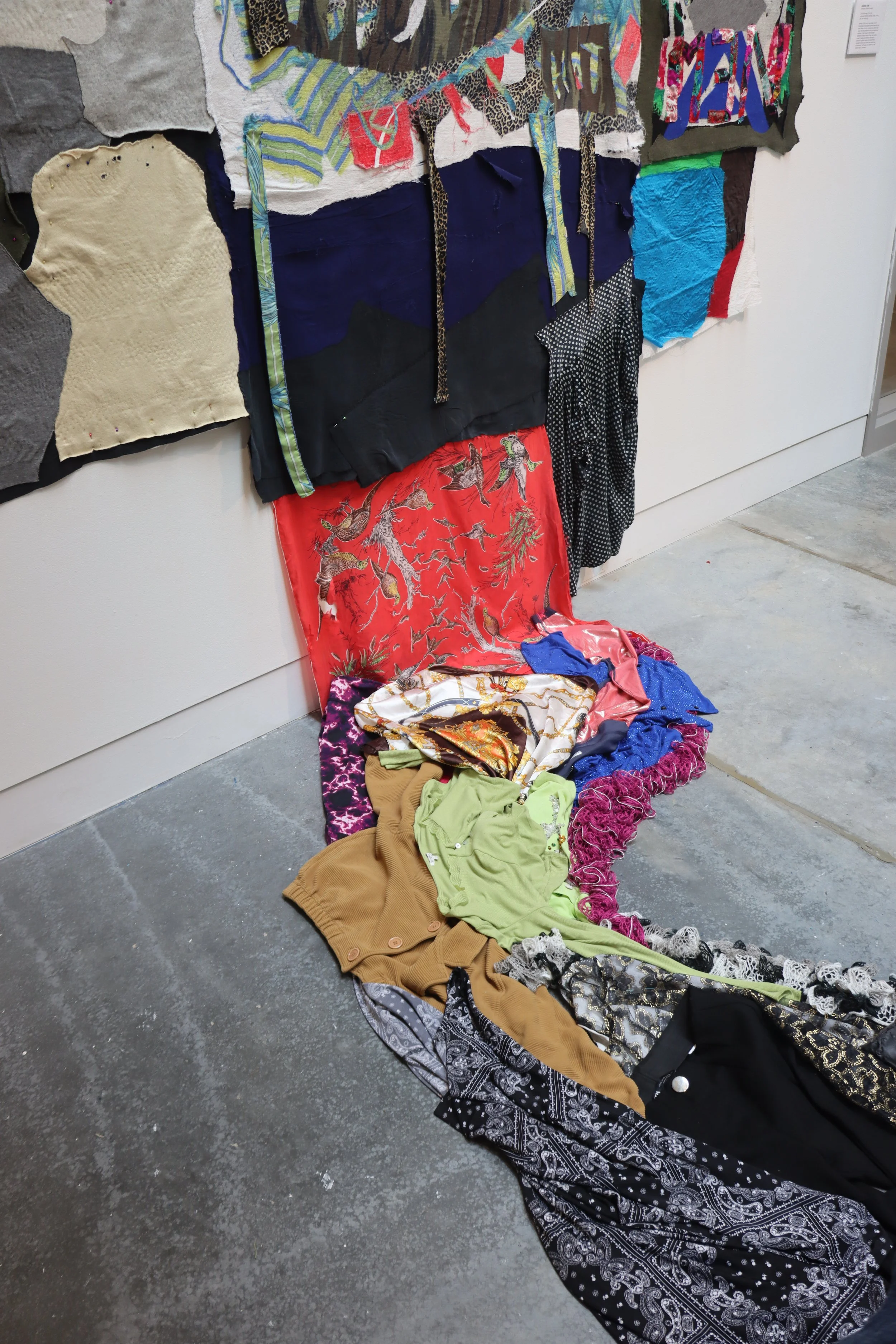
Savanna Todd, Chruomwan, 7’x 4’, 2024. Cardboard, repurposed clothing, jewelry, glue, paper fasteners, second-hand clothing.
Savanna Todd, Synthetinsect, 40” x 60”, 2023. Wire clothing hangers, plastic clothing hangers, chicken wire, synthetic clothing materials, light bulbs, plastic capsules, zap straps, wire.
Savanna Todd, Unknowable, Yet Close, 3’5” x 3’, 2023. Silks, thread, wire clothing hangers, hot glue, pipe cleaners.
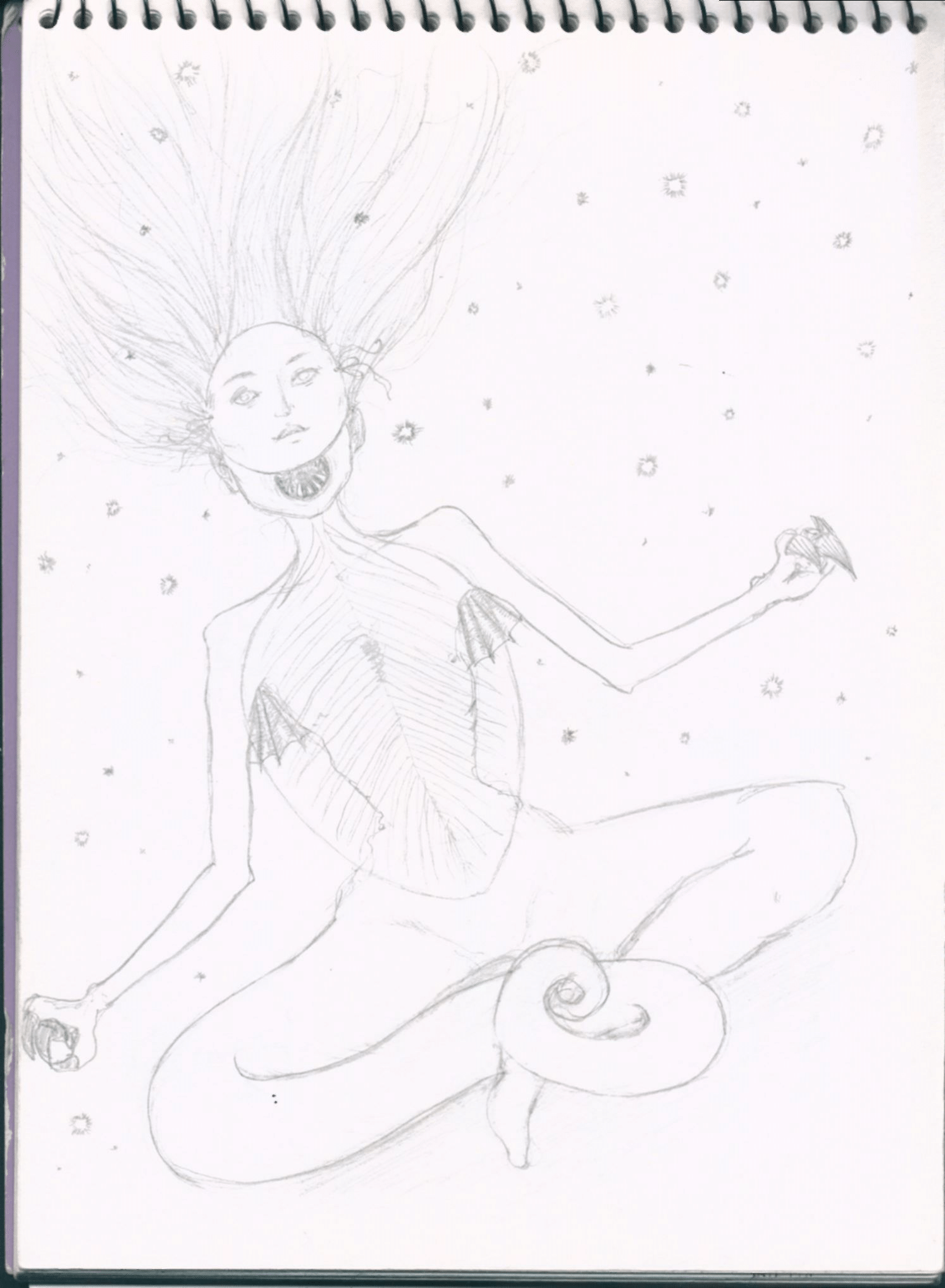
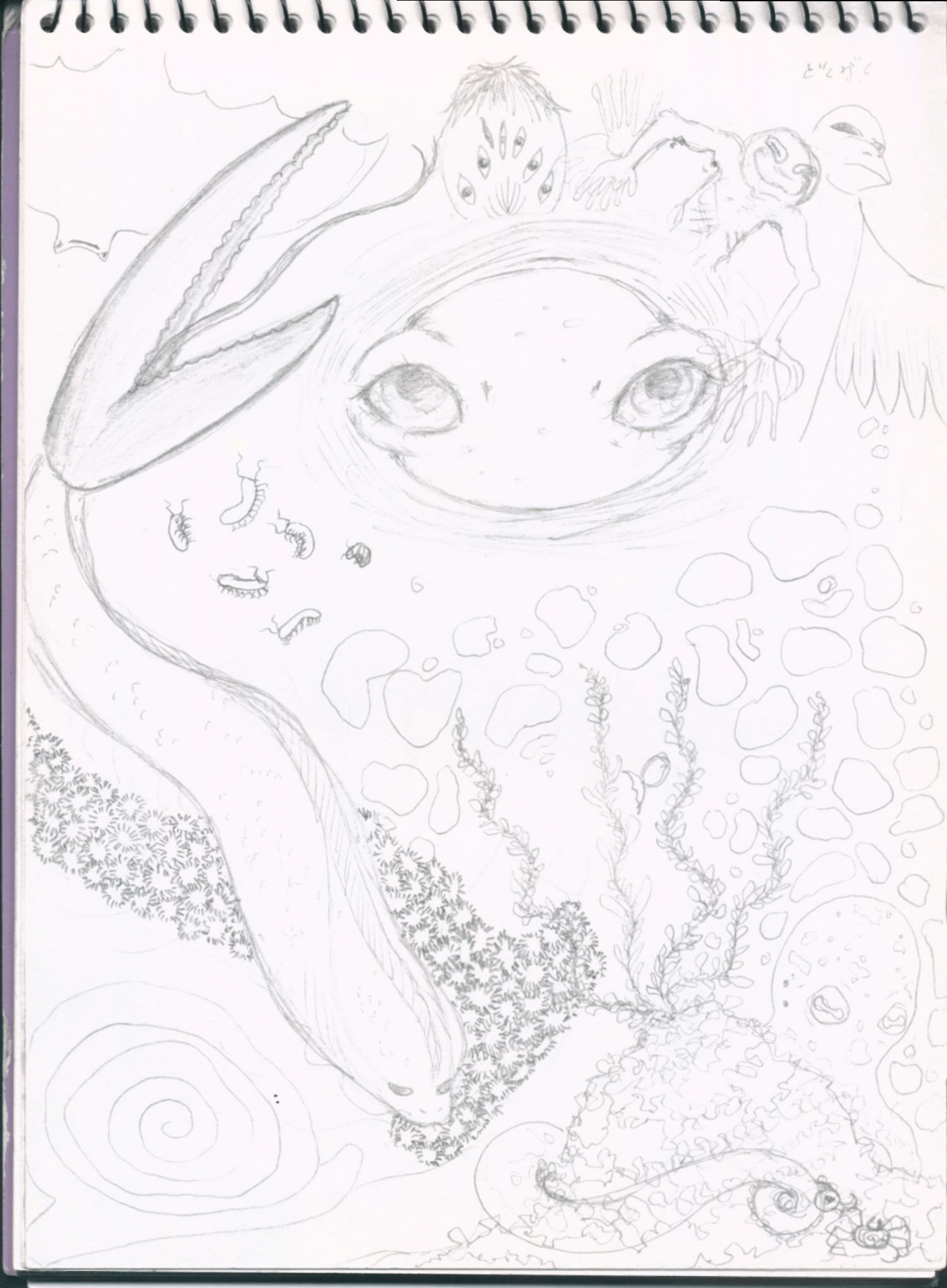
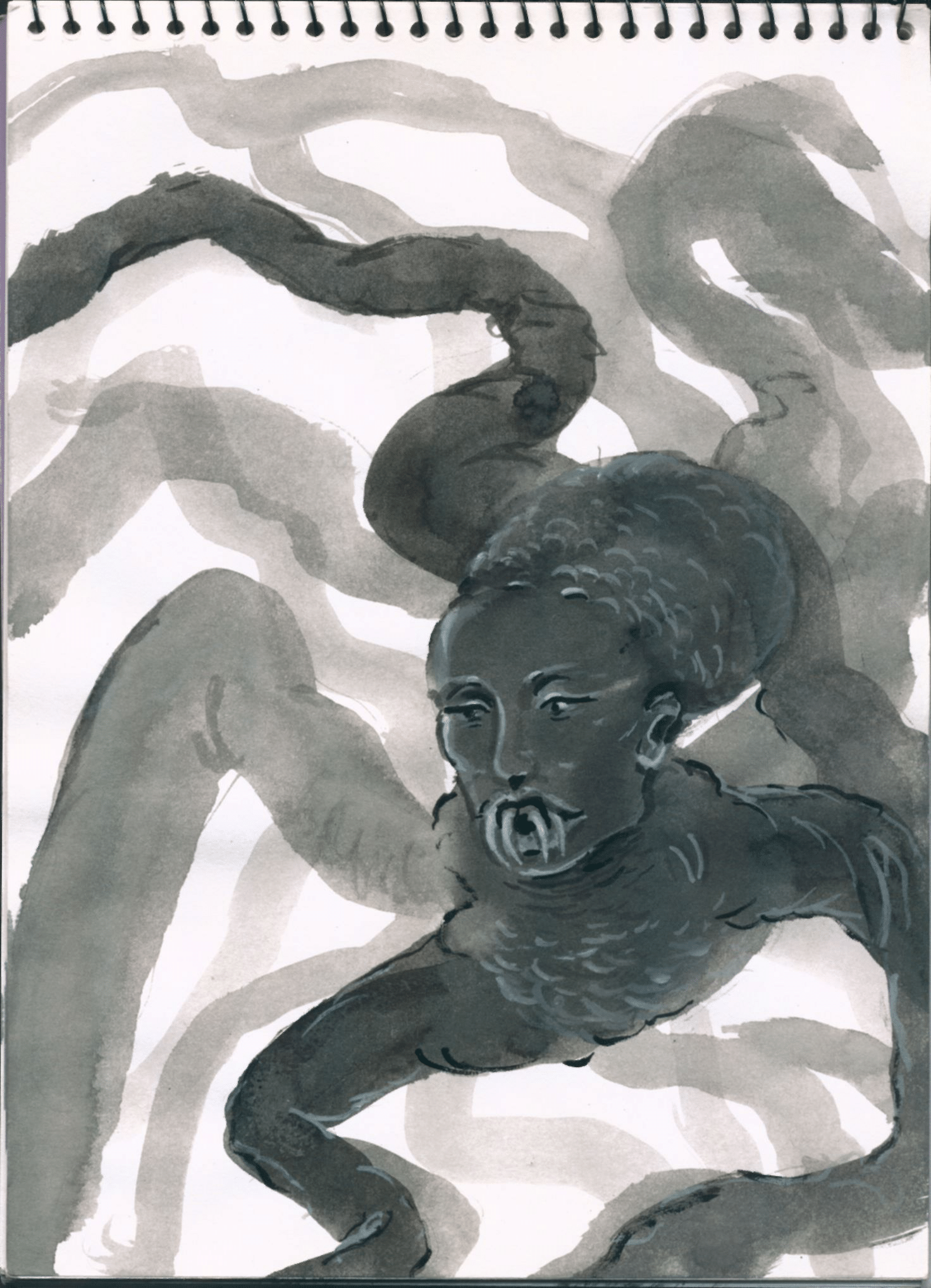
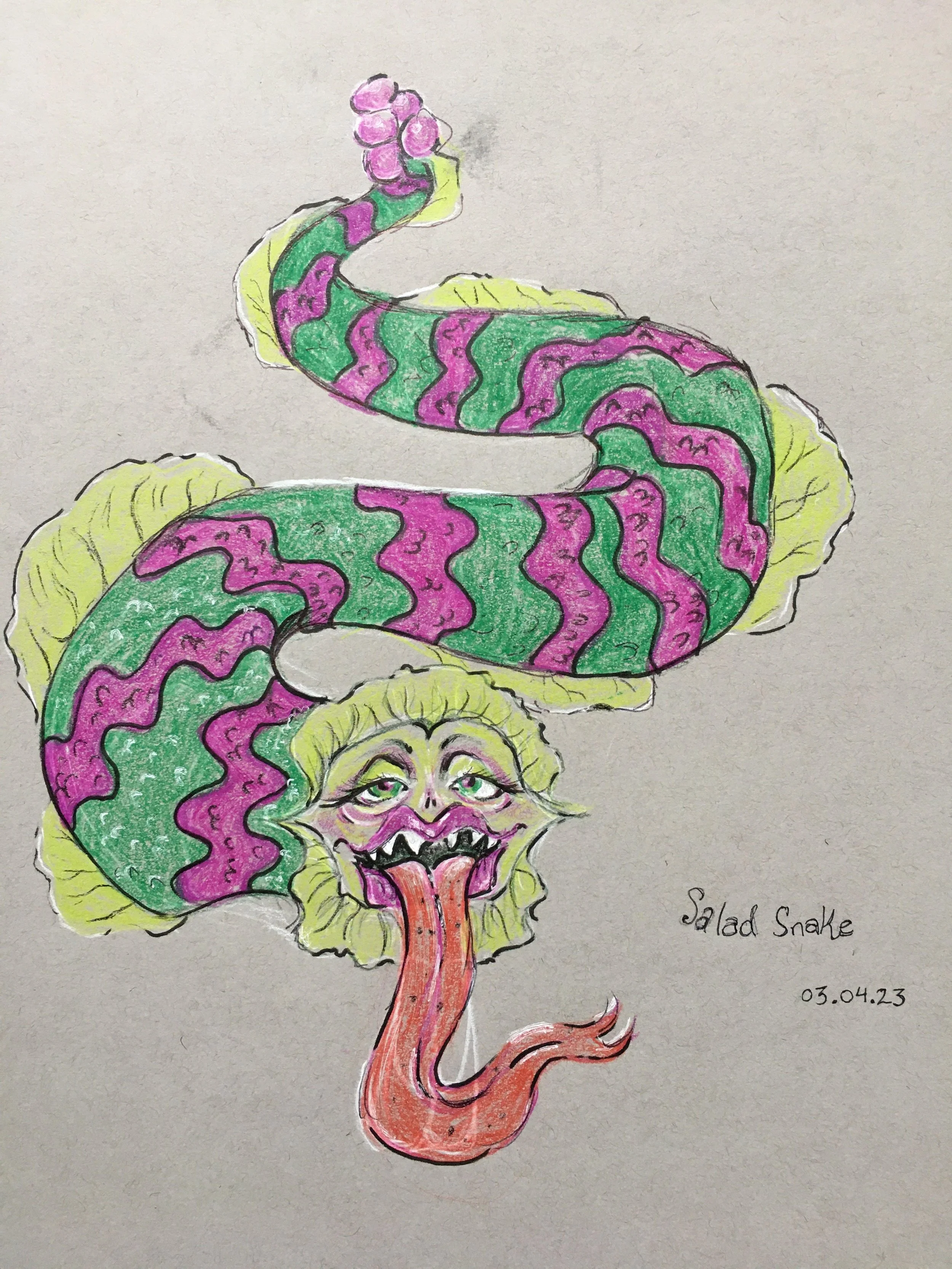
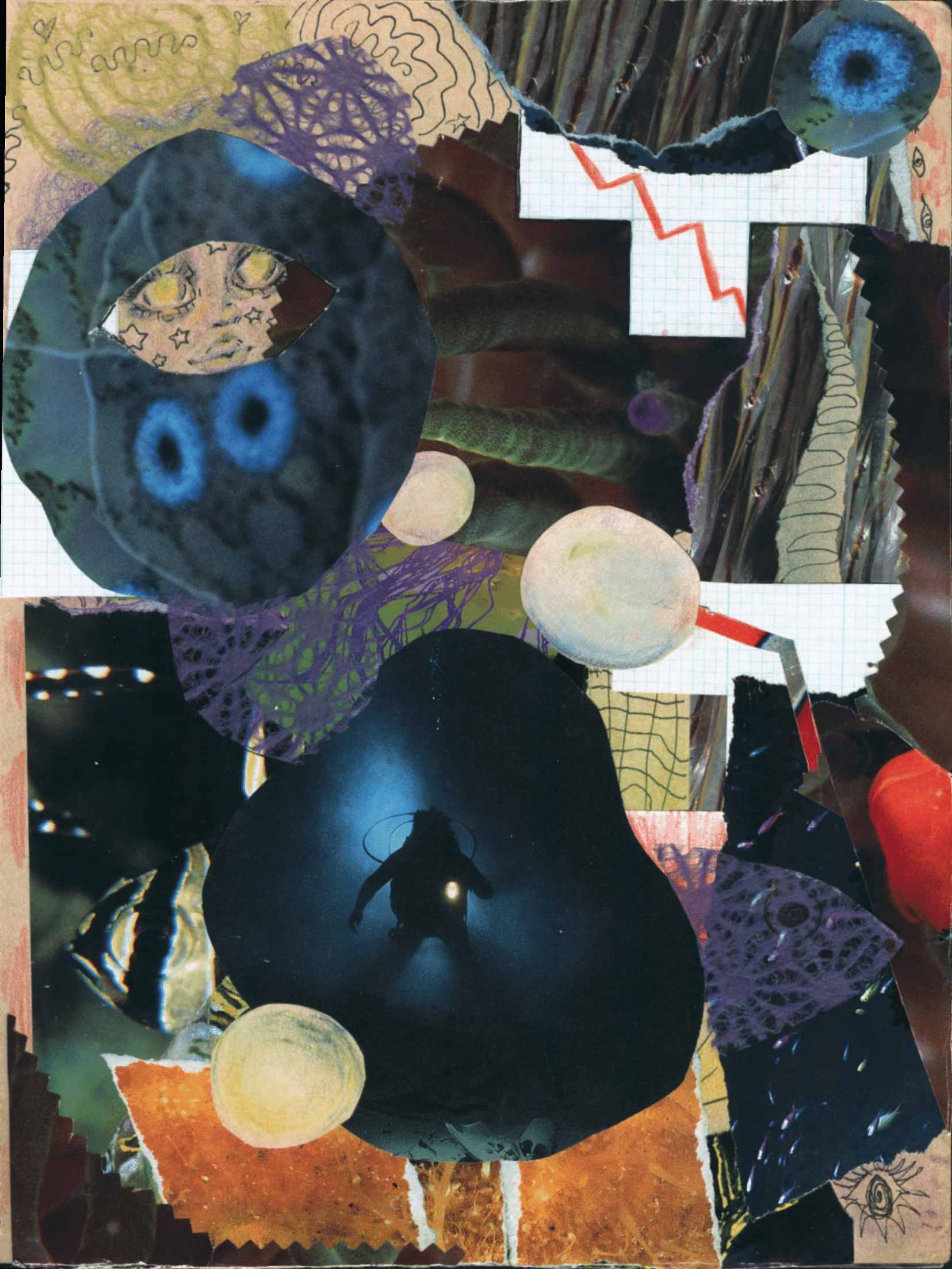
On this page you will find illustrations that are preliminary to the formation of the monster sculpture and illustrations that stand on their own.
The 3D monsters I design transform when I render them in different mediums. Going from on paper to sculptures, the design of the monsters body surprises me with how it demands to be transformed as it emerges into new worlds.
More recently, I have returned to my foundation of drawing rather than making sculptures. As a result you will soon find recent works being posted here in the form of pencil crayon illustrations.
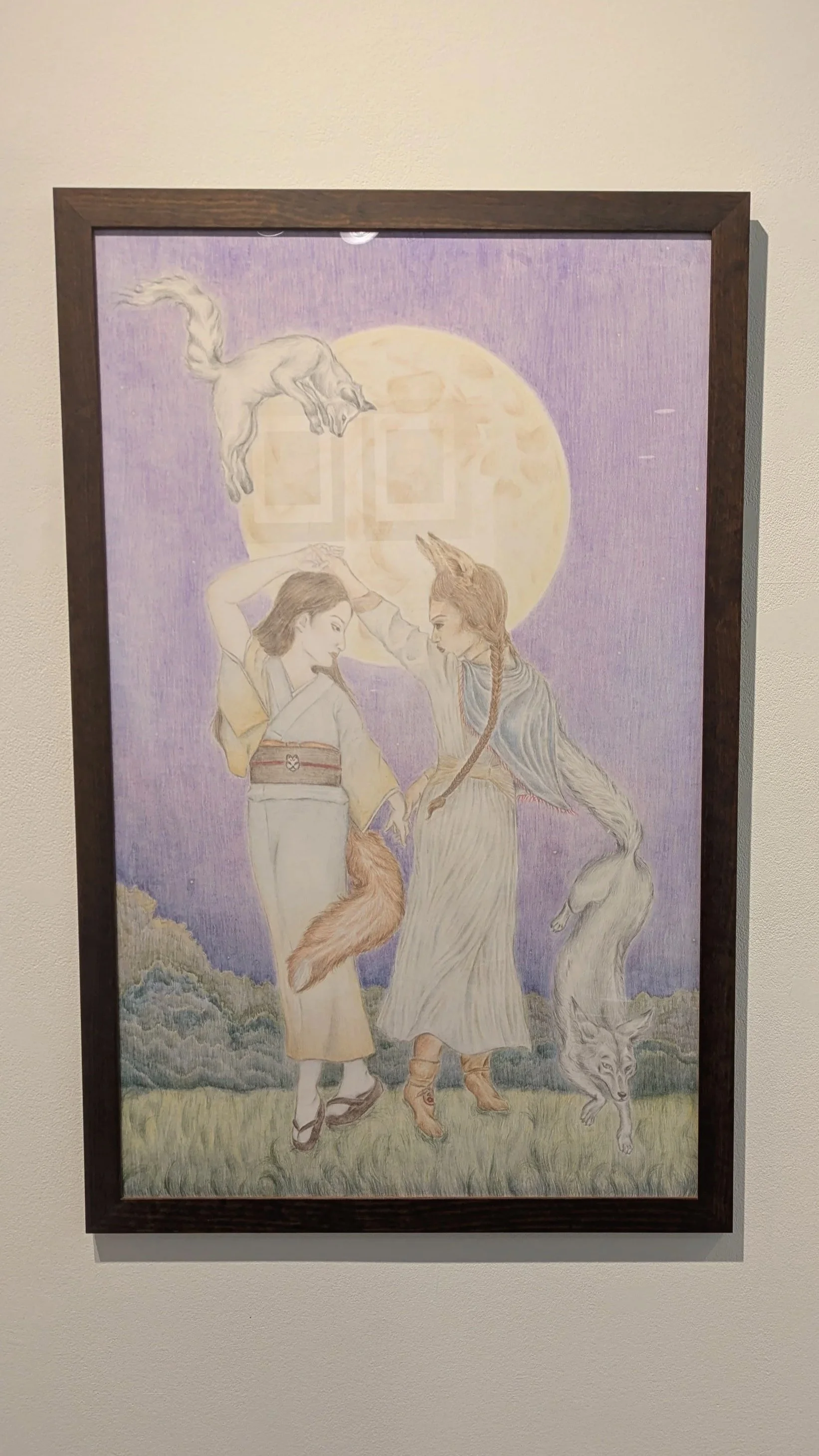
This work represents two figures in cultural storytelling; the coyote trickster and the fox trickster. Coyote is a popular story character amongst many Indigenous communities in North America.The fox trickster originated in Chinese folklore and has since made its way throughout East Asia. The depiction of these figures are based on representations of my own cultural background as well as my cultural experiences abroad. Coyote is depicted here in an outfit inspired by historical photos of Métis women. Fox is represented in kimono, inspired by historical Japanese paintings of foxes as supernatural beings. The representations of culturally significant clothing from the past, that continues into the present is a nod to the persistence of these stories throughout time.
Growing up I heard stories of ‘Coyote the trickster’ in my community. In Indigenous cultures like my own, Wîsahkêcâhk (Cree) coyote teaches lessons to humans. Through stories of coyote, I have come to understand this dynamic character as a magician, a fool, a shapeshifter and a teacher. The fox trickster character is depicted in this artwork in accordance with my experience and research while in Japan. Yōkai ( 妖怪 ) is perhaps best translated to English as a term encompassing monsters, ghosts, demons and other strange phenomena. Amongst Japan’s rich yōkai legends, is the kitsune ( 狐 ) or fox. Like the figure of the coyote in the west, foxes are considered shapeshifting tricksters in the East.
In the cultural significance of monsters, coyote and fox can be seen as radically refusing to fit into colonial binaries. These characters’ ability to shapeshift suggests that all beings are connected to each other, rather than separated into a hierarchy. As with any good supernatural tale, the cultural stories of coyote and fox invite us to critically think about our own actions and the world around us. They teach about balance and harmony, chaos and order, as they take part in both humorous and serious matters. Coyote and fox span across time and place. The two meet here in this artwork in passing, before they each move onto their next story.